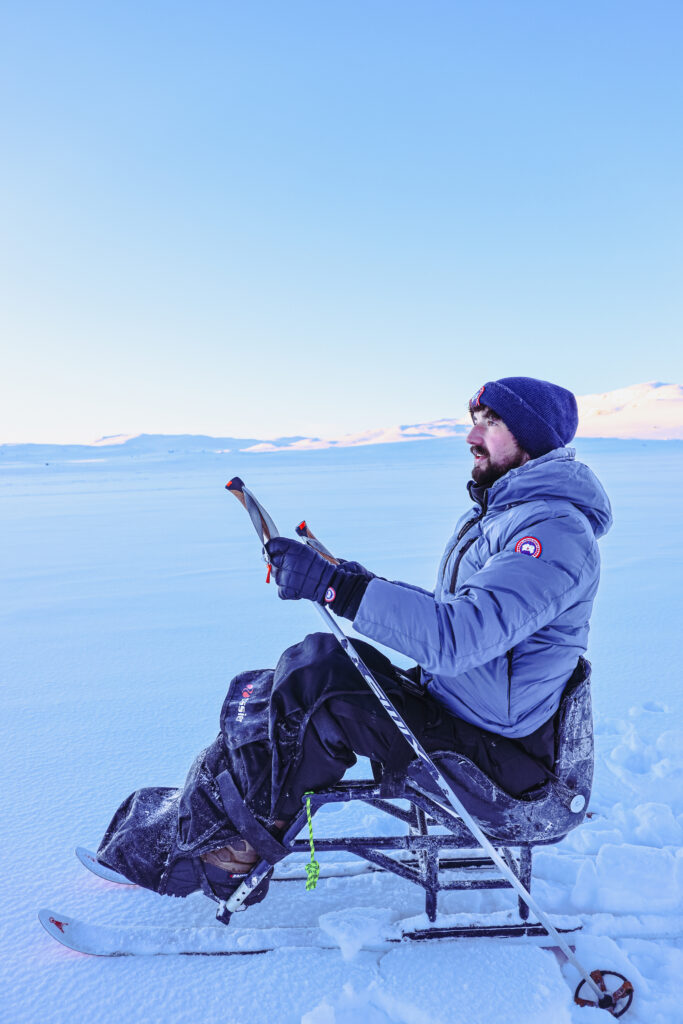
Hardangervidda Glacier
In February 2024, as part of his preparations for an Antarctic expedition, Darren led a small team across one of Norway’s most hostile and historic landscapes – the Hardangervidda mountain plateau. Long used as a winter training ground by polar pioneers such as Ernest Shackleton and Robert Falcon Scott, Hardangervidda would become the setting for the first known crossing of the plateau by someone living with a Spinal Cord Injury using a sit-ski.
Over the course of six days, and in the depths of winter with temperatures dropping to –25°C, the team departed the remote outpost of Finse and travelled across frozen lakes, glaciers, and treacherous mountain passes. With no prior records, routes, or examples to draw from, progress was slow and setbacks were frequent. Midway through the crossing, the team was struck by a violent storm and forced to halt, waiting out fierce winds in the relative safety of their tents while uncertainty mounted, and before they could continue their journey.
In his keynote speeches, Darren uses the Hardangervidda crossing to explore the role of mental resilience and adaptability when operating in unfamiliar territory. He shares how progress is often made not by pushing harder, but by knowing when to pause, reassess, and conserve energy – highlighting that sustainable performance, in extreme environments and everyday life, depends as much on judgement and mindset as it does on physical capability.